
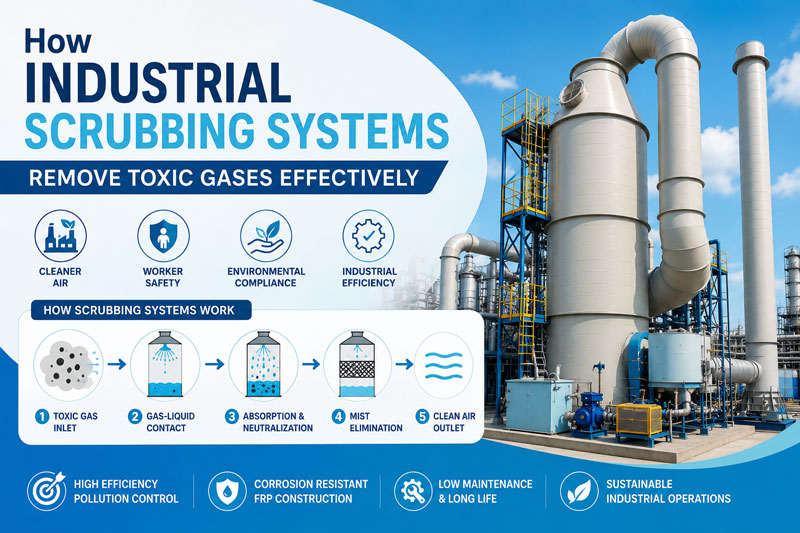
Industrial facilities generate exhaust gases as a byproduct of manufacturing, processing, and treatment operations. Many of these emissions contain hazardous substances that can pose serious risks to human health, equipment, and the environment if released untreated into the atmosphere.
Industrial scrubbing systems remove toxic gases from exhaust streams by using specially designed liquid-based treatment processes that absorb, neutralize, or chemically react with harmful pollutants before clean air is discharged. These systems are widely used in chemical manufacturing, wastewater treatment, water treatment, pharmaceutical production, petrochemical processing, and other industries where air pollution control is critical.
As environmental regulations become stricter across the Middle East, Africa, and global industrial markets, scrubbing systems have become an essential component of sustainable and compliant industrial operations.
Quick Facts About Industrial Scrubbing Systems
| Feature | Details |
|---|---|
| Primary Function | Removal of toxic gases and air pollutants |
| Common Industries | Chemical, Wastewater, Water Treatment, Pharmaceutical, Petrochemical |
| Typical Pollutants Removed | HCl, NH3, H2S, SO2, Cl2, VOCs |
| Most Common Type | Wet Scrubber |
| Preferred Construction Material | FRP (Fiberglass Reinforced Plastic) |
| Benefits | Emission Control, Regulatory Compliance, Worker Safety |
| Removal Efficiency | Up to 99% depending on design and application |
What Is an Industrial Scrubbing System?
An industrial scrubbing system is an air pollution control device designed to remove harmful gases, chemical vapors, odors, and particulate contaminants from industrial exhaust air.
The system captures contaminated air from production areas and treats it before releasing it through a stack or ventilation system. Depending on the type of pollutant being removed, scrubbers can use water, alkaline solutions, acidic solutions, or specialized chemical reagents to neutralize harmful emissions.
Scrubbers are commonly installed in facilities that handle corrosive chemicals, acids, solvents, and other hazardous substances that generate toxic airborne contaminants.
Why Toxic Gas Removal Is Important
Industrial exhaust streams may contain a variety of hazardous gases that can negatively impact workers, nearby communities, and the environment.
Common concerns include:
- Respiratory health hazards
- Environmental pollution
- Corrosion of industrial equipment
- Workplace safety risks
- Unpleasant odors
- Regulatory penalties and non-compliance
Without effective emission control systems, industries can face operational disruptions, legal consequences, and reputational damage.
How Scrubbing Systems Remove Toxic Gases: Step-by-Step Process
1. Collection of Contaminated Air
The process begins by capturing contaminated exhaust gases directly from the source.
These sources may include:
- Chemical reactors
- Storage tanks
- Process vessels
- Wastewater treatment units
- Chemical dosing stations
- Industrial production lines
Ducting systems, hoods, and local exhaust ventilation systems transport the contaminated air to the scrubber unit.
2. Introduction into the Scrubber Chamber
Once collected, the exhaust gas enters the scrubber chamber where treatment begins.
The design of the chamber ensures maximum contact between the polluted gas stream and the scrubbing liquid.
3. Gas-Liquid Contact
This is the most critical stage of the scrubbing process.
Inside the scrubber, the contaminated air passes through:
- Spray nozzles
- Packing media
- Liquid distribution systems
- Venturi sections (in some designs)
These components increase the contact surface area between the gas and liquid, improving pollutant removal efficiency.
4. Absorption and Neutralization
As toxic gases come into contact with the scrubbing solution, they are absorbed into the liquid phase.
Chemical reactions may then occur to neutralize the contaminants.
Examples include:
- Hydrochloric acid gases neutralized using caustic solutions
- Ammonia absorbed using acidic solutions
- Hydrogen sulfide oxidized and treated through chemical reactions
- Sulfur dioxide neutralized using alkaline solutions
This process effectively removes pollutants from the exhaust stream.
5. Mist Elimination
After gas treatment, mist eliminators remove any remaining liquid droplets from the cleaned air stream.
This ensures that only treated air exits the system.
6. Clean Air Discharge
The purified air is safely released through the exhaust stack while the contaminated scrubbing liquid is either recirculated, treated, or disposed of according to environmental guidelines.
Toxic Gases Commonly Removed by Scrubbing Systems
Industrial scrubbers are capable of removing a wide range of harmful pollutants.
| Toxic Gas | Common Source | Potential Impact |
|---|---|---|
| Hydrochloric Acid (HCl) | Chemical Manufacturing | Corrosion and respiratory irritation |
| Sulfur Dioxide (SO₂) | Industrial Processing | Air pollution and acid rain |
| Ammonia (NH₃) | Fertilizer Plants | Health hazards and odor |
| Hydrogen Sulfide (H₂S) | Wastewater Treatment | Toxicity and strong odors |
| Chlorine (Cl₂) | Water Treatment | Respiratory hazards |
| VOCs | Chemical Processing | Environmental pollution |
Types of Scrubbing Systems Used for Toxic Gas Removal
Wet Scrubbers
Wet scrubbers use liquid solutions to absorb and neutralize pollutants.
They are highly effective for:
- Acid gas removal
- Chemical fume control
- Odor management
- Corrosive gas treatment
Packed Bed Scrubbers
Packed bed scrubbers contain specially engineered packing materials that increase contact between gas and liquid.
Benefits include:
- High efficiency
- Low pressure drop
- Effective chemical absorption
- Suitable for continuous operation
These systems are commonly used in chemical and wastewater treatment facilities.
Venturi Scrubbers
Venturi scrubbers utilize high-velocity airflow to maximize pollutant capture.
They are particularly effective when both particulate matter and gaseous contaminants need to be removed simultaneously.
Industries That Depend on Scrubbing Systems
Chemical Manufacturing
Chemical plants often generate corrosive gases that require continuous emission control.
Scrubbing systems help remove:
- Acid fumes
- Solvent vapors
- Chemical byproducts
Wastewater Treatment Plants
Wastewater treatment facilities commonly produce:
- Hydrogen sulfide
- Ammonia
- Odorous compounds
Scrubbers effectively eliminate these pollutants and improve surrounding air quality.
Water Treatment Facilities
Water treatment operations frequently utilize chlorine and other treatment chemicals that may generate harmful emissions requiring proper control.
Pharmaceutical Manufacturing
Pharmaceutical production processes can release solvent vapors and chemical emissions that require specialized treatment systems.
Petrochemical Industries
Petrochemical facilities use scrubbers to manage hazardous gases and comply with stringent environmental regulations.
Why FRP Scrubbers Are Preferred in Corrosive Environments
Traditional metallic scrubbers can deteriorate rapidly when exposed to aggressive chemical environments.
Fiberglass Reinforced Plastic (FRP) offers several advantages:
- Exceptional corrosion resistance
- Lightweight construction
- Long service life
- Low maintenance requirements
- High structural strength
- Reduced lifecycle costs
For chemical processing, wastewater treatment, and water treatment applications, FRP scrubbers have become the preferred solution due to their durability and reliability.
Benefits of Installing Industrial Scrubbing Systems
Improved Environmental Compliance
Scrubbers help facilities meet local and international emission standards.
Enhanced Worker Safety
Removing hazardous gases protects employees from exposure-related health risks.
Better Air Quality
Pollutants are removed before they enter the atmosphere, reducing environmental impact.
Reduced Equipment Corrosion
Treating corrosive gases helps protect nearby equipment and infrastructure.
Improved Community Relations
Effective odor and emission control minimizes complaints from neighboring communities.
Sustainable Operations
Modern pollution control systems support corporate environmental responsibility initiatives.
How to Choose the Right Scrubbing System
Selecting the most effective scrubbing solution depends on multiple factors:
- Type of pollutant
- Gas concentration
- Airflow volume
- Temperature conditions
- Required removal efficiency
- Available installation space
- Regulatory requirements
A properly engineered system delivers higher performance, lower operating costs, and long-term reliability.
Frequently Asked Questions
What is the main purpose of an industrial scrubbing system?
The primary purpose is to remove harmful gases, fumes, odors, and airborne contaminants from industrial exhaust streams before atmospheric discharge.
Which industries require scrubber systems?
Chemical manufacturing, wastewater treatment, water treatment, pharmaceutical, petrochemical, fertilizer, and metal processing industries commonly use scrubbers.
What gases can a wet scrubber remove?
Wet scrubbers can remove hydrochloric acid, sulfur dioxide, ammonia, hydrogen sulfide, chlorine, and many other chemical pollutants.
Why are FRP scrubbers preferred?
FRP scrubbers offer superior corrosion resistance, durability, lightweight construction, and lower maintenance requirements compared to traditional metal systems.
How efficient are industrial scrubbing systems?
Depending on system design and operating conditions, properly engineered scrubbers can achieve removal efficiencies of up to 99%.
Conclusion
Industrial scrubbing systems play a vital role in controlling harmful emissions and ensuring environmentally responsible operations. By capturing, absorbing, and neutralizing toxic gases before they enter the atmosphere, these systems help industries improve air quality, protect workers, maintain regulatory compliance, and reduce environmental impact.
For industries operating in chemical manufacturing, wastewater treatment, and water treatment sectors, investing in a properly designed scrubbing system is essential for long-term operational success and sustainability.
Nivra Envirotech Pvt. Ltd. specializes in advanced industrial scrubbing systems, FRP scrubbers, packed bed scrubbers, and air pollution control solutions engineered for demanding industrial applications. Our customized systems help industries achieve superior emission control, corrosion resistance, and reliable long-term performance.
- air pollution control equipment
- air pollution control systems
- chemical fume scrubbers
- chemical plant scrubbers
- corrosive gas removal
- environmental compliance solutions
- FRP scrubber manufacturer
- FRP scrubbers
- gas scrubbing systems
- industrial air quality management
- industrial emission control
- industrial exhaust treatment
- industrial scrubbers
- industrial scrubbing systems
- industrial ventilation systems
- packed bed scrubbers
- pollution control equipment
- toxic gas removal systems
- wastewater treatment scrubbers
- wet scrubber systems