
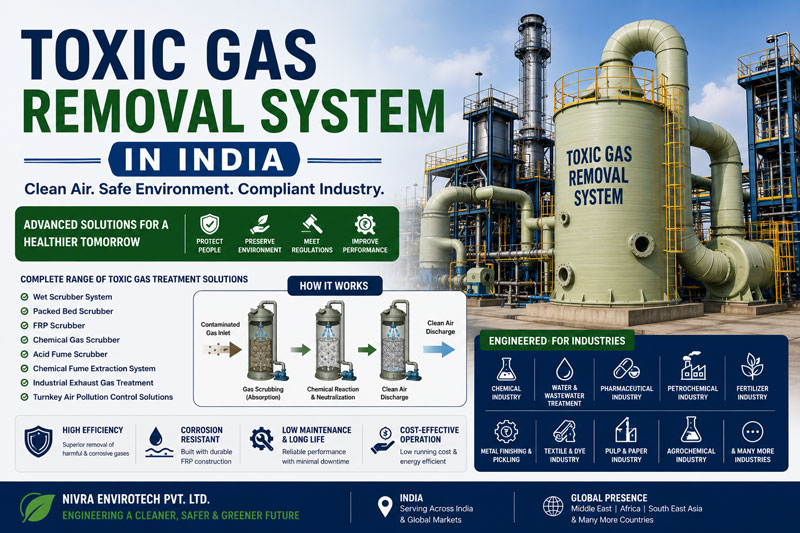
Chemical manufacturing plants handle a wide range of hazardous substances that can release toxic gases, corrosive fumes, and harmful vapors during production, storage, mixing, and processing operations. Without proper air pollution control measures, these emissions can endanger workers, damage equipment, contaminate the environment, and result in costly regulatory penalties.
A toxic gas removal system is an essential industrial solution that captures, neutralizes, and removes hazardous gases before they are released into the atmosphere. Modern industrial toxic gas removal systems use advanced gas scrubbing technologies such as wet scrubber systems, packed bed scrubbers, FRP scrubbers, and chemical gas scrubbers to ensure safe, efficient, and environmentally compliant operations.
As chemical manufacturing continues to grow in Vapi, Gujarat, across India, and in international markets including Saudi Arabia, UAE, Oman, Qatar, Kuwait, South Africa, Kenya, Nigeria, Egypt, Indonesia, Malaysia, and Vietnam, investing in reliable toxic gas removal equipment has become a necessity rather than an option.
Quick Overview
| Feature | Benefit |
|---|---|
| Toxic Gas Removal | Protects workers and the environment |
| Industrial Gas Scrubbing System | Neutralizes harmful chemical gases |
| Wet Scrubber System | Removes corrosive fumes and vapors |
| Packed Bed Scrubber | High-efficiency gas absorption |
| FRP Scrubber | Excellent corrosion resistance |
| Chemical Fume Extraction System | Captures fumes at the source |
| Emission Control System | Helps industries meet environmental regulations |
What Is a Toxic Gas Removal System?
A toxic gas removal system is an engineered industrial air pollution control system designed to capture, absorb, neutralize, and safely discharge harmful gases generated during industrial operations.
These systems are commonly installed in:
- Chemical manufacturing plants
- Water treatment facilities
- Wastewater treatment plants
- Pharmaceutical industries
- Petrochemical plants
- Fertilizer manufacturing units
- Metal pickling and electroplating industries
- Textile and dye manufacturing plants
Depending on the type of contaminants, a toxic gas treatment system may include a wet scrubber system, packed bed scrubber, FRP scrubber, chemical fume extraction system, and other specialized toxic gas removal equipment.
Why Chemical Plants Need a Toxic Gas Removal System
Chemical production processes frequently release gases that are hazardous to people, equipment, and the environment.
Common emissions include:
- Hydrochloric Acid (HCl)
- Chlorine (Cl₂)
- Ammonia (NH₃)
- Sulfur Dioxide (SO₂)
- Hydrogen Sulfide (H₂S)
- Nitric Acid Vapors
- Volatile Organic Compounds (VOCs)
Without a properly designed industrial toxic gas removal system, these pollutants can create serious operational and environmental risks.
Protecting Workers from Hazardous Gas Exposure
Employee safety is one of the primary reasons chemical plants install toxic gas removal systems.
Hazardous gases can cause:
- Respiratory problems
- Eye irritation
- Skin burns
- Long-term health complications
- Workplace accidents
Installing an efficient chemical fume extraction system together with a chemical gas scrubber helps maintain cleaner and safer working conditions.
Meeting Environmental Regulations
Environmental agencies worldwide continue to tighten emission standards for industrial facilities.
A modern emission control system helps chemical plants:
- Reduce air pollution
- Meet environmental regulations
- Avoid legal penalties
- Improve environmental sustainability
Facilities equipped with a reliable industrial air pollution control system are better positioned to comply with local and international environmental standards.
Preventing Equipment Corrosion
Corrosive gases can significantly reduce the lifespan of industrial equipment.
Acid fumes often attack:
- Pipelines
- Structural steel
- Electrical systems
- Process equipment
- Ventilation systems
Installing an acid fume scrubber helps remove corrosive vapors before they damage valuable plant infrastructure.
Improving Workplace Air Quality
A properly designed industrial gas scrubbing system continuously removes harmful airborne contaminants.
Benefits include:
- Cleaner production environments
- Reduced odors
- Better visibility
- Improved worker comfort
- Lower health risks
Better air quality also contributes to higher operational efficiency.
How Industrial Toxic Gas Removal Systems Work
Modern industrial toxic gas removal systems follow a multi-stage treatment process.
Step 1: Gas Collection
Hazardous gases are captured directly from reactors, storage tanks, process vessels, and production equipment using a chemical fume extraction system.
Step 2: Gas Transfer
The contaminated air is transported through corrosion-resistant ducting into the gas scrubbing system.
Step 3: Gas Scrubbing
Inside the industrial gas scrubbing system, pollutants come into contact with specially selected scrubbing liquids.
Depending on the application, the system may use:
- Water
- Caustic solution
- Acidic solution
- Chemical neutralizing agents
Step 4: Neutralization
The gases react with the scrubbing solution and are neutralized before discharge.
Step 5: Clean Air Discharge
Only treated air exits the industrial exhaust gas treatment system, significantly reducing harmful emissions.
Types of Toxic Gas Removal Equipment
Different industries require different types of toxic gas removal equipment depending on the contaminants involved.
Wet Scrubber System
A wet scrubber system removes acid gases, chemical fumes, and odors by bringing contaminated air into contact with a liquid scrubbing medium.
Applications include:
- Chemical manufacturing
- Wastewater treatment
- Pharmaceutical plants
- Fertilizer production
Packed Bed Scrubber
A packed bed scrubber contains specially engineered packing media that maximize gas-liquid contact.
Advantages include:
- High removal efficiency
- Lower pressure drop
- Excellent chemical absorption
- Continuous operation
Packed bed scrubbers are widely used for corrosive gas treatment.
FRP Scrubber
An FRP scrubber is manufactured using Fiberglass Reinforced Plastic to withstand highly corrosive environments.
Benefits include:
- Excellent corrosion resistance
- Long service life
- Low maintenance
- Lightweight construction
FRP scrubbers are ideal for aggressive chemical processing applications.
Chemical Gas Scrubber
A chemical gas scrubber is designed specifically to neutralize harmful chemical gases before atmospheric discharge.
These systems improve both environmental compliance and worker safety.
Acid Fume Scrubber
An acid fume scrubber effectively removes acid vapors generated during chemical processing, pickling, electroplating, and acid storage operations.
Industries That Require Toxic Gas Treatment Systems
Modern toxic gas treatment systems are essential across multiple industries.
Chemical Manufacturing
Removes acid fumes, chlorine, ammonia, and solvent vapors.
Water Treatment Plants
Controls chlorine emissions and treatment chemical vapors.
Wastewater Treatment Facilities
Removes hydrogen sulfide, ammonia, and odor-causing gases.
Pharmaceutical Industry
Controls solvent vapors and chemical process emissions.
Petrochemical Industry
Treats hydrocarbon gases and corrosive emissions.
Fertilizer Manufacturing
Controls ammonia and acid gas emissions.
Benefits of Installing an Industrial Air Pollution Control System
Investing in a complete industrial air pollution control system offers numerous advantages.
Enhanced Worker Safety
Protects employees from hazardous gas exposure.
Regulatory Compliance
Supports compliance with environmental standards.
Equipment Protection
Reduces corrosion and extends equipment lifespan.
Improved Environmental Performance
Minimizes harmful atmospheric emissions.
Reduced Maintenance Costs
Corrosion-resistant equipment requires less maintenance.
Better Corporate Sustainability
Supports ESG initiatives and responsible manufacturing.
Why FRP Scrubbers Are Preferred
Many industries choose FRP scrubbers because they offer outstanding performance in corrosive environments.
Advantages include:
- High corrosion resistance
- Lightweight construction
- Excellent structural strength
- Low maintenance
- Long operational life
Compared with conventional metal scrubbers, FRP systems provide significantly lower lifecycle costs.
Why Chemical Plants in India and Global Markets Are Investing in Toxic Gas Removal Systems
Industrial expansion is driving increased demand for advanced industrial exhaust gas treatment systems across:
- Vapi, Gujarat
- India
- Saudi Arabia
- UAE
- Oman
- Qatar
- Kuwait
- South Africa
- Kenya
- Nigeria
- Egypt
- Indonesia
- Malaysia
- Vietnam
Growing environmental regulations and increasing workplace safety requirements are making toxic gas removal systems an essential investment for chemical industries worldwide.
Frequently Asked Questions
What is a toxic gas removal system?
A toxic gas removal system captures and neutralizes hazardous industrial gases before they are released into the atmosphere.
What industries use industrial toxic gas removal systems?
Chemical manufacturing, wastewater treatment, water treatment, pharmaceutical, petrochemical, fertilizer, and metal processing industries commonly use these systems.
What is the difference between a wet scrubber system and a packed bed scrubber?
A wet scrubber system uses a liquid scrubbing medium to remove contaminants, while a packed bed scrubber enhances gas-liquid contact using specialized packing media for higher absorption efficiency.
Why are FRP scrubbers preferred?
FRP scrubbers provide excellent corrosion resistance, lower maintenance requirements, and longer service life in aggressive chemical environments.
What gases can a chemical gas scrubber remove?
Chemical gas scrubbers commonly remove hydrochloric acid, chlorine, ammonia, sulfur dioxide, hydrogen sulfide, nitric acid vapors, and various volatile organic compounds.
Conclusion
Every chemical manufacturing facility should invest in a reliable toxic gas removal system to ensure worker safety, environmental compliance, and long-term operational efficiency. Whether through a wet scrubber system, packed bed scrubber, FRP scrubber, chemical gas scrubber, or a complete industrial air pollution control system, effective gas treatment protects people, equipment, and the environment from harmful industrial emissions.
As industries continue to expand across Vapi, Gujarat, India, and international markets, advanced industrial toxic gas removal systems and industrial exhaust gas treatment solutions have become essential for sustainable manufacturing.
Nivra Envirotech Pvt. Ltd. is a trusted manufacturer of toxic gas removal systems, industrial gas scrubbing systems, FRP scrubbers, packed bed scrubbers, wet scrubber systems, chemical fume extraction systems, and customized emission control systems for chemical, water treatment, wastewater treatment, pharmaceutical, and petrochemical industries across India and global markets.
- acid fume scrubber
- chemical fume extraction system
- chemical gas scrubber
- emission control system
- FRP scrubber
- gas scrubbing system
- industrial air pollution control system
- industrial exhaust gas treatment
- industrial gas scrubbing system
- industrial toxic gas removal system
- packed bed scrubber
- toxic gas removal equipment
- toxic gas removal system
- toxic gas scrubber
- toxic gas treatment system
- wet scrubber system